
2 Week Japan Itinerary for First-Time Visitors: Tokyo, Kyoto & Osaka
Planning your first trip to Japan is incredibly exciting, but it can also feel a little overwhelming.
With so many places to see, it can be difficult to decide where to go, how long to stay, and how on earth to fit everything into just two weeks.
After spending time in Japan myself, I put together this 2 week Japan itinerary for first-time visitors.
Here you’ll find three of the country’s most popular destinations covered: Tokyo, Kyoto, and Osaka.
It gives you enough time to see many of Japan’s highlights without turning your holiday into a race from one attraction to the next.
At a glance
Days 1-5: Tokyo
Days 6-9: Kyoto
Days 10-14: Osaka
Tokyo
Day 1: Arrive in Tokyo
Welcome to Japan!
After arriving in Tokyo, get your IC card, sort out any transport passes you need, and check into your hotel.
If jet lag hasn’t completely defeated you yet, spend some time exploring the area around your accommodation.
And, of course, make your first trip to a konbini to try an Onigiri or Tamago Sando.
Day 2: Shibuya, Meiji Jingu & Shinjuku
Shibuya Crossing
Start the day by exploring Shibuya and seeing the famous Shibuya Crossing.
Yes, it really is just a pedestrian crossing, but somehow it still feels like an attraction.
Meiji Jingu Shrine
Right in the middle of Tokyo, is Meiji Jingu.
It feels surprisingly peaceful there.
Surrounded by trees and quiet walking paths, it’s easy to forget that you’re in one of the biggest cities in the world.
Established in 1920, this important Shinto shrine is definitely one of the must-see places in Tokyo.
Tokyo Metropolitan Government Building
For a fantastic view over Tokyo, head to the Tokyo Metropolitan Government Building in Shinjuku.
Take the elevator up to the observation deck and enjoy the city from above.
In the evening, there are also often impressive projections displayed on the building.
Omoide Yokocho
Finish your evening at Omoide Yokocho aka Memory Lane, a maze of tiny restaurants and narrow alleyways close to Shinjuku Station.
Yes, it’s touristy, and some places may have a small seating charge, but I still think it’s worth experiencing at least once.
Day 3: Tokyo Skytree, Asakusa & Akihabara
Tokyo Skytree
Start your day at Tokyo Skytree, the third tallest tower in the world and one of Tokyo’s landmarks.
You can visit the observation decks for incredible views, but even seeing the tower from below is impressive.
It also looks especially beautiful when it lights up at night.

Stroll Along the Sumida River
Close to Tokyo Skytree, you’ll find the Sumida River and Sumida Park.
Take some time to walk along the river and explore the neighborhood.
It’s a nice change of pace before heading back into Tokyo’s busier streets.
Sensō-ji Temple
Sensō-ji is Tokyo’s oldest temple and also one of my favorite temples in the city.
The temple grounds are beautiful during the day, but I especially recommend coming back or staying until the evening.
Once crowds disappear and the buildings are illuminated, Sensō-ji shows a completely different beautiful side of itself.
Akihabara by Night
Akihabara at night is something else.
Expect enormous screens, anime stores, game shops, arcades, and probably more flashing signs than your eyes are prepared for.
And yes, spending at least a few hundred yen on gachapon machines is practically mandatory.
Day 4: Tsukiji, Matcha & Tokyo Tower
Tsukiji Outer Market
Start your morning early at Tsukiji Outer Market, ideally before the biggest crowds arrive.
This is the perfect place to snack your way through freshly prepared seafood, Japanese sweets, Tamagoyaki, and plenty of other dishes.
Make sure to bring some cash, as not every small shop or food stall accepts cards.
Nakajima Tea House
After the busy market, slow things down with a visit to Nakajima Tea House.
Located inside a beautiful Japanese garden, it’s the perfect place to relax for a while.
Take off your shoes, choose a seat, and enjoy freshly prepared matcha together with a traditional Japanese sweet.

Tokyo Tower
One of Tokyo’s most recognizable landmarks is Tokyo Tower.
Whether you visit during the day or after sunset, it’s worth seeing at least once.
Personally, I love the atmosphere around the tower when it lights up in the evening.
There is also Shiba Park nearby for a nice calm stroll.
Day 5: Day Trip from Tokyo
For your final full day in Tokyo, I recommend taking a day trip to either Yokohama or Kamakura.
Both are easy to reach from Tokyo with public transport and have completely different atmospheres.
Choose Kamakura if you want temples, shrines, nature, and a more traditional feel.
If you prefer a more modern waterfront city, Chinatown with plenty of food, Yokohama is a good choice.
Affiliate widget: If you book through this widget, I may earn a small commission at no extra cost to you.
Kyoto
Day 6: Travel from Tokyo to Kyoto
Take the Shinkansen from Tokyo to Kyoto, check into your accommodation, and keep the rest of the day relaxed.
Explore the neighborhood around your accomodation, grab something good to eat, and get your first impression of Kyoto.
You’ll have plenty of temples coming up, no need to stress about collecting all of them on the first evening.
Day 7: Fushimi Inari, Kiyomizu-dera & Higashiyama
Fushimi Inari Taisha
Fushimi Inari Taisha is one of Kyoto’s most famous attractions and a true Japan travel classic.
The thousands of bright red torii gates are just as impressive in real life as they look in photos.
Lower sections are most of the time extremely busy, but the further you hike up Mount Inari, the quieter the paths usually become.
Kiyomizu-dera
Kiyomizu-dera became a UNESCO World Heritage Site in 1994 and is one of the most popular places to visit in Kyoto.
The temple itself is beautiful, but make sure you also leave time to explore the surrounding Higashiyama district, with its traditional streets, small shops and cafés.
If you choose to rent a Kimono, the traditional streets there make for a good photo spot.

Kōdai-ji Temple & Bamboo
If you want to see some bamboo without making a separate trip to the famous Arashiyama Bamboo Grove (which is crazy overcrowded anyway), I recommend visiting Kōdai-ji Temple.
Day 8: Kinkaku-ji, Nijō Castle & Yasaka Shrine
Kinkaku-ji
Kinkaku-ji, also known as the Golden Pavilion, is one of Kyoto’s most spectacular temples.
Originally built as the retirement villa of shogun Ashikaga Yoshimitsu, it was converted into a Zen temple after his death in 1408.
Covered in gold leaf, the pavilion looks especially stunning when sunlight reflects from its surface.
The surrounding garden is beautifully maintained as well, making the entire visit feel very scenic.
Nijō Castle
Nijō Castle served as the Kyoto residence of the Tokugawa shoguns and is an especially interesting stop if you want to learn more about Japanese history.
The palace interiors, gardens, and famous “nightingale floors” make it very different from the temples and shrines you’ll see elsewhere in Kyoto.
Yasaka Shrine in the Evening
Located in the heart of Kyoto, Yasaka Shrine is beautiful during the day but especially atmospheric in the evening.
Once the lanterns light up, the entire shrine has a warm glow.
It’s also very easy to combine with an evening walk through Gion and the surrounding traditional streets.
Day 9: Higashi Hongan-ji & Explore Kyoto
Higashi Hongan-ji
Higashi Hongan-ji is a beautiful historic temple with huge wooden buildings and spacious, peaceful grounds.
It’s a lovely place for a quieter morning and also gives you a nice view towards nearby Kyoto Tower.

Keep the Rest of the Day Flexible
Don’t plan every minute of your Japan itinerary, that’s one thing I for sure learnt during my trips.
Use your final afternoon in Kyoto to wander through neighborhoods, revisit somewhere you loved, discover a small café, or simply see where the streets take you.
Sometimes the unplanned parts of a trip end up being the best ones
Affiliate widget: If you book through this widget, I may earn a small commission at no extra cost to you.
Osaka
Day 10: Travel to Osaka & Dotonbori
Take the train from Kyoto to Osaka, check into your accommodation, and spend some time exploring the neighborhood.
Dotonbori at Night
In the evening, head to Dotonbori.
You may want to bring sunglasses, because apparently Osaka decided there is no such thing as too many neon signs. 😉
Walk along the canal, see the famous Glico sign (very popular photo spot), and try some of Osaka’s delicious street food.
You should definitely try some Takoyaki, but beware the tasty fried octopus balls are extremly hot.

Day 11: Namba Yasaka Shrine & Shinsekai
Explore Namba
Spend your morning wandering around the Namba area.
There are countless shops, restaurants, side streets, and places to stop for food.
Namba Yasaka Shrine
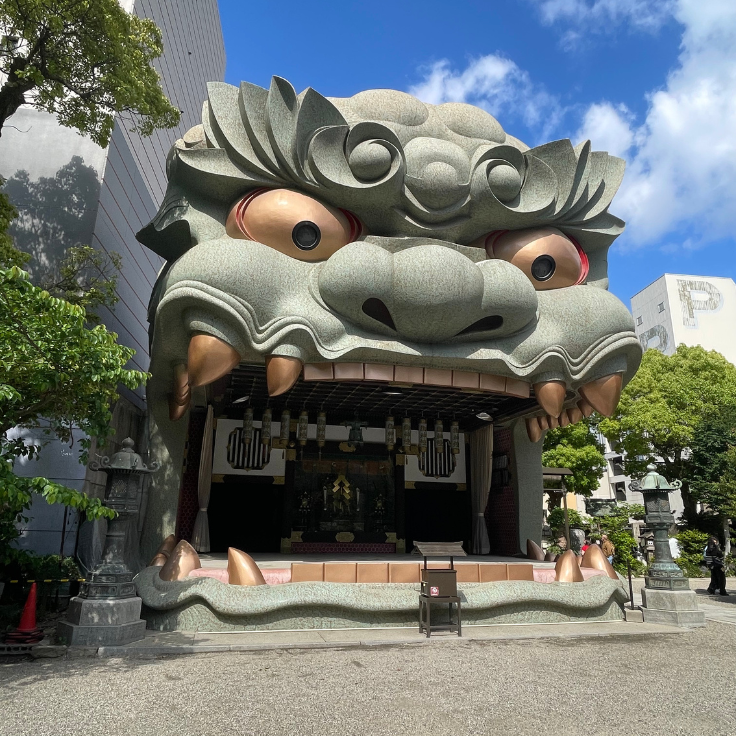
Namba Yasaka Shrine is one of Osaka’s most unique shrines.
As soon as you enter, you’ll be greeted by the enormous lion-head stage, a spectacular view which you won’t forget so soon.
The giant mouth is believed to swallow evil spirits and bring good luck, particularly for success in school or business.

Shinsekai
Shinsekai, meaning “New World,” is another interesting area to explore in Osaka.
Originally developed in the early 20th century, the district still has a nostalgic, slightly retro atmosphere.
Expect crazy restaurant storefronts, plenty of local food, colorful signs, and the famous Tsūtenkaku Tower overlooking the neighborhood.
Day 12: Osaka Castle & Umeda
Osaka Castle
Osaka Castle was one of the first Japanese castles I visited, and its architecture immediately impressed me.
The castle is surrounded by large grounds and gardens, making it a beautiful place for a walk and some photos (but you should also expect crowds here).
For an entrance fee, you can also visit the museum inside and head up for views over Osaka.
Hōkoku Shrine
While visiting Osaka Castle Park, stop by nearby Hōkoku Shrine before continuing your day.
It’s literally right next to it and easy to reach, so no detour is needed.
Explore Umeda
Spend the afternoon and evening exploring Umeda, Osaka’s modern northern city center.
Walk around the area, browse the enormous shopping centers, find somewhere to eat, and simply enjoy a completely different side of Osaka.
Day 13: Katsuo-ji
For your final full day, travel a little outside central Osaka to Katsuo-ji.
This beautiful temple is famous for the thousands of Daruma dolls scattered around its grounds and its peaceful mountain setting.
It’s one of my favorite additions to an Osaka itinerary because it gives you a break from the busy city center and lets you experience another side of the region.
You can also get your own Daruma doll there, which makes a nice and unique souvenir.
Keep the rest of your day flexible.
Grab one last amazing meal, revisit your favorite neighborhood, or spend the evening wondering how your suitcase somehow became twice as full as when you arrived.

Day 14: Saying Goodbye to Japan
Make your way to the airport for your flight home.
And that’s the end of your 2 week Japan itinerary through Tokyo, Kyoto, and Osaka.
I hope you’ll return home with the same kind of amazing memories I did.
Japan is such an interesting and special country, with so much to experience that one trip will probably just make you want to start planning the next one.
And yes, there’s a good chance you’ll miss the konbini within about 48 hours. 😉
Affiliate widget: If you book through this widget, I may earn a small commission at no extra cost to you.
More Travel Stories You Might Enjoy….
4 Days in Osaka: Neon Lights, Hidden Gems & Delicious Food
Discover Osaka’s lively streets, delicious food, peaceful temples and unforgettable day trips with this relaxed 4-day itinerary.

How to plan your trip stress-free
These are my practical tips to help you plan a more relaxed and stress-free Japan trip.

Food recommendations in Tokyo
Finding good restaurants as a pescetarian / vegetarian can be a little tricky. These are my recommendations to make it a little easier.