
4 Days in Osaka Itinerary: Temples, Street Food & Easy Day Trips
With its colorful neon signs, incredible street food, historic temples, and lively neighborhoods, there’s so much to discover in Osaka.
This 4 days in Osaka itinerary combines some of the city’s most famous sights with a few of my personal favorites and two lovely day trips.
You’ll get to experience both the busy, colorful side of Osaka and some quieter places away from the crowds.
Day 1: Osaka Castle, Namba Yasaka Shrine & Dotonbori
Osaka Castle
Let’s start with one of the most famous landmarks in Japan: Osaka Castle.
Surrounded by a beautiful park with large gardens and walking paths, Osaka Castle is definitely worth visiting, even if you don’t plan on going inside.
The castle grounds are perfect for a relaxed walk and some beautiful photos.
As this is one of Osaka’s most popular attractions, beware that there will be quite some crowds.
If you’re interested, you can also pay an entrance fee to explore the museum inside the castle and enjoy panoramic views over Osaka from the observation deck.
Hōkoku Shrine
While exploring Osaka Castle Park, make sure to stop by Hōkoku Shrine.
Located right inside the park, it’s an easy addition to your Osaka itinerary without having to take a detour.
The shrine is dedicated to Toyotomi Hideyoshi, one of Japan’s most important historical figures, and offers another interesting glimpse into Osaka’s history.
Namba Yasaka Shrine
Next, head towards Namba to visit one of my favorite shrines in Osaka.
Namba Yasaka Shrine is unlike any other shrine I’ve seen in Japan.
As soon as you enter, you’re greeted by an enormous lion-head stage with its mouth wide open.
It’s quite a sight, and definitely not something you’ll forget anytime soon.
The giant mouth is believed to swallow evil spirits and bring good luck, particularly when it comes to academic or business success.
It’s also a relatively quick stop, making it easy to combine with the other attractions on your first day.

Dotonbori by Night
Once the sun goes down, head to Dotonbori, one of Osaka’s most famous entertainment and food districts.
This is where Osaka really shows off its colorful side.
Expect enormous illuminated signs, busy streets, and neon lights reflecting beautifully in the canal.
Of course, you can’t visit Dotonbori without taking a photo of the famous Glico Running Man sign.
Is it touristy? Absolutely. Would I still recommend it? Of course, it’s fun.
If you’re getting hungry by now, you’re in the right place.
Dotonbori is one of the best places to try Osaka street food, so take your time exploring the food stalls and restaurants.
Day 2: Shitennō-ji Temple, Tennōji Park & Shinsekai
Shitennō-ji Temple
Start your second day with a visit to Shitennō-ji, one of Japan’s oldest Buddhist temples, originally founded in 593.
It’s a beautiful place to explore traditional Japanese architecture and learn a little more about the country’s Buddhist history.
Even though the temple is located in a busy part of Osaka, the grounds have a much calmer atmosphere.
Take some time to walk around before continuing to nearby Tennōji Park.
Tennōji Park
After visiting the temple, head towards Tennōji Park for a little break from the busy city.
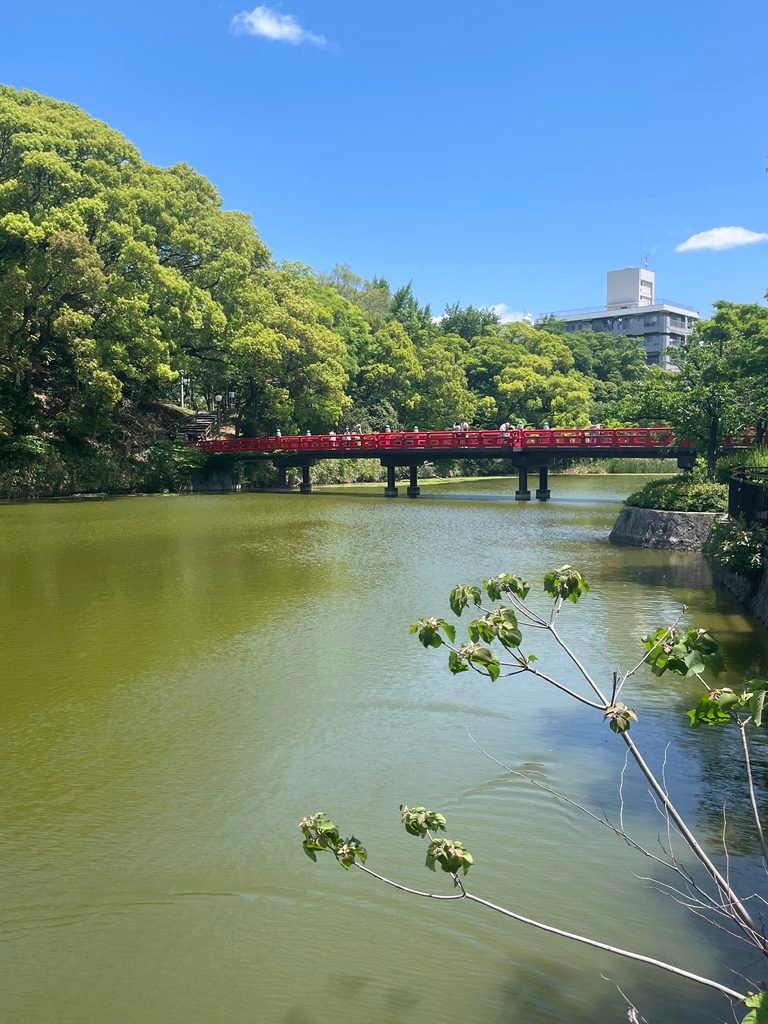
One of my favorite spots here is the beautiful red Wake Bridge crossing Kawazoko Pond.
You can even spot Tsūtenkaku Tower in the distance.
I also saw lots of tiny turtles around the pond, which was honestly one of my favorite little discoveries.
The park is a lovely place to slow down for a while before heading into a completely different atmosphere later in the day.
Shinsekai by Night
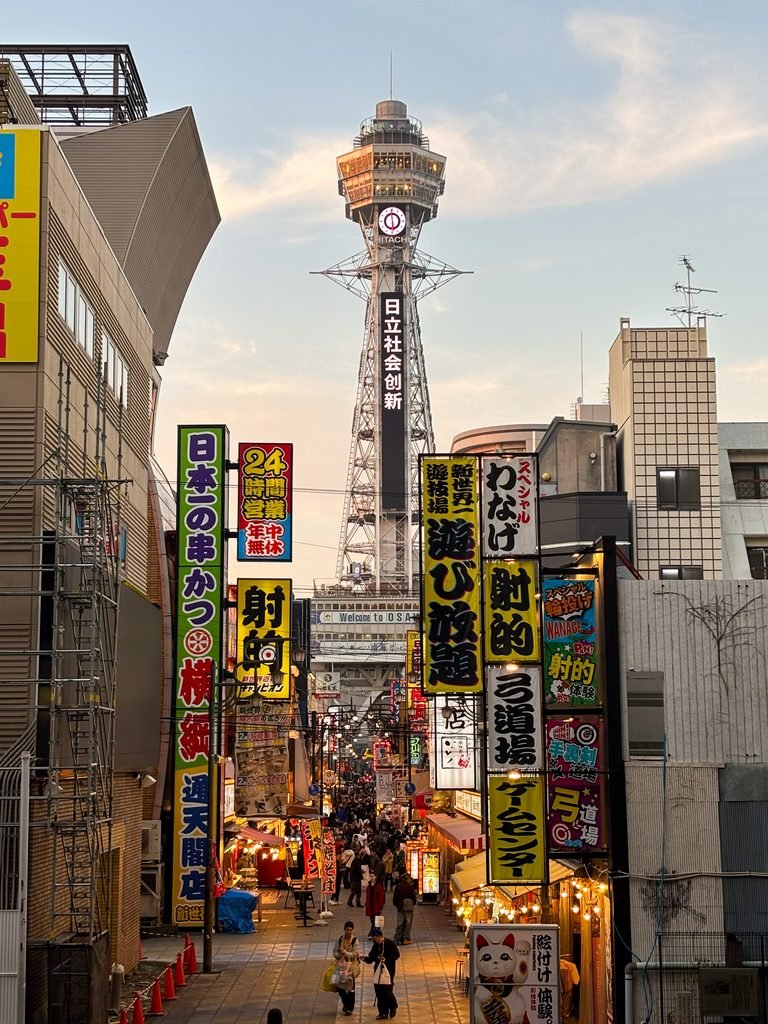
End your second day in Shinsekai, which translates to “New World.”
Originally developed in the early 20th century, Shinsekai still has a nostalgic, slightly retro atmosphere that makes it one of the most interesting neighborhoods in Osaka.
Expect colorful signs, enormous restaurant decorations, plenty of local food, and the famous Tsūtenkaku Tower overlooking the district.
I especially recommend visiting in the evening, when all the signs light up and the neighborhood becomes even more colorful.
Some restaurant storefronts are so over the top that you’ll probably spend just as much time looking at them as deciding what to eat.
Day 3: Katsuo-ji Temple – A Peaceful Escape from Osaka
After two days exploring Osaka’s busy streets, it’s time to venture a little outside the city center.
Today’s destination is Katsuo-ji Temple, located in the mountains of Minoh, north of central Osaka.
This beautiful Buddhist temple is famous for the thousands of little red Daruma dolls scattered throughout its grounds.
You’ll find them sitting along stone walls, tucked into tiny corners, and lined up almost everywhere you look.
Daruma dolls symbolize perseverance and determination, and Katsuo-ji is particularly associated with success and victory.
You can even get your own Daruma doll, which makes a unique souvenir from Japan.
Besides the Daruma dolls, I particularly loved the temple’s beautiful surroundings and peaceful mountain setting.
For me, Katsuo-ji is one of the best additions to a four-day Osaka itinerary because it offers a completely different experience from the busy city center.
How to get there: Take the train to Minoh-Kayano Station, followed by a bus to Katsuo-ji Temple.
Allow roughly 1–1.5 hours from central Osaka, depending on your starting point, and check the return bus schedule in advance.

A Relaxed Evening in Osaka
Keep the rest of your day flexible.
You can revisit your favorite neighborhood, try another local restaurant, or simply enjoy wandering around without having a specific destination in mind.
Or maybe spend some time wondering how your suitcase has somehow become twice as full as when you arrived.
Day 4: Day Trip to Uji – A Matcha Lover’s Paradise
For your final day, I highly recommend taking a day trip from Osaka to Uji, one of Japan’s most famous green tea towns.
Located in Kyoto Prefecture, Uji is around an hour away from Osaka by train, making it a convenient and worthwhile day trip.
And if you love matcha, you’re going to have a great time here.
Uji is famous for producing high-quality Japanese green tea, but there’s so much more to discover than just matcha shops.
Whether you want to shop for some delicious matcha, learn more about traditional tea production, or explore beautiful temples, there’s something for everyone.
You can visit the famous Byōdō-in Temple, enjoy a peaceful walk along the Uji River and explore the traditional tea shops around town.
Uji is also a lovely place to slow down and enjoy a more relaxed side of Japan.
I personally think it’s a wonderful contrast to Osaka’s lively atmosphere, making it a great way to finish your four-day itinerary.
If you want to explore Uji in more detail, check out my day trip to Uji guide for more things to see and do.
What to Eat in Osaka: 3 Foods You Shouldn’t Miss
Osaka is famous for its incredible food scene (it’s also called “the kitchen of Japan”), so trying some of the local specialties is an absolute must.
Here are three foods you should keep an eye out for during your Osaka trip.
Osaka-Style Okonomiyaki
If you ever meet someone from Osaka or Hiroshima, maybe don’t ask them which city makes the better okonomiyaki.
You might accidentally start a war. (Just joking, of course.)
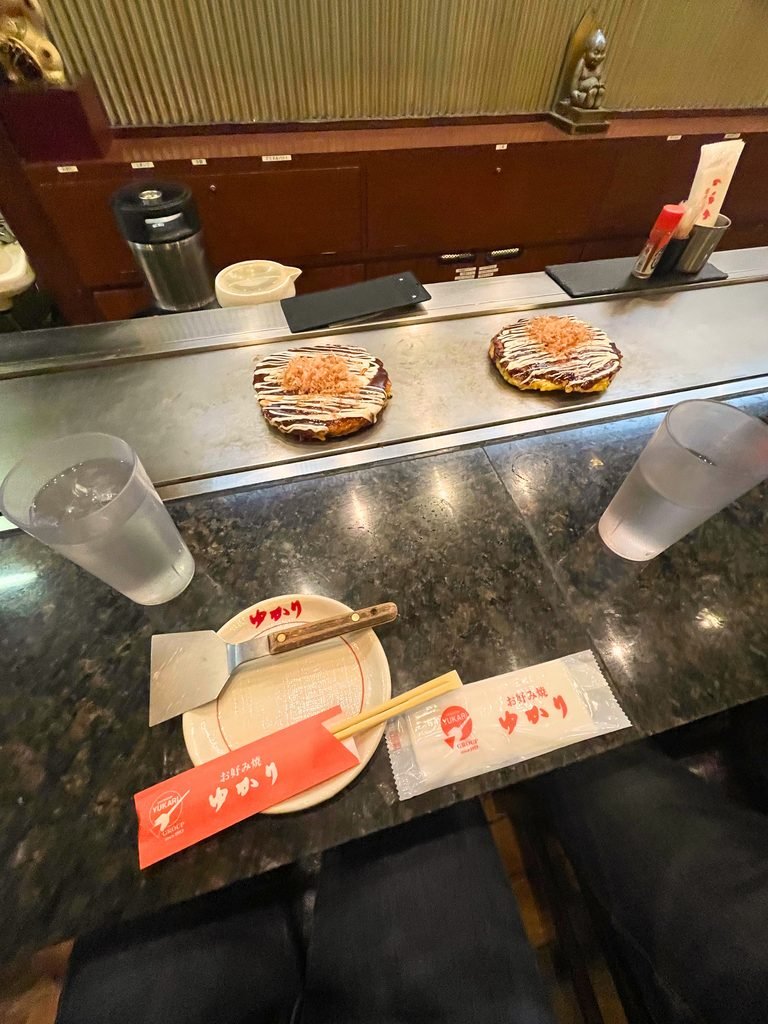
Osaka-style okonomiyaki is a delicious savory pancake made with cabbage, batter, eggs, and your choice of additional ingredients, usually topped with a rich sauce and Japanese mayonnaise.
Unlike Hiroshima-style okonomiyaki, where the ingredients are layered, the Osaka version mixes them together before cooking.
Both are delicious, but when you’re in Osaka, trying the local version is a must.
Takoyaki
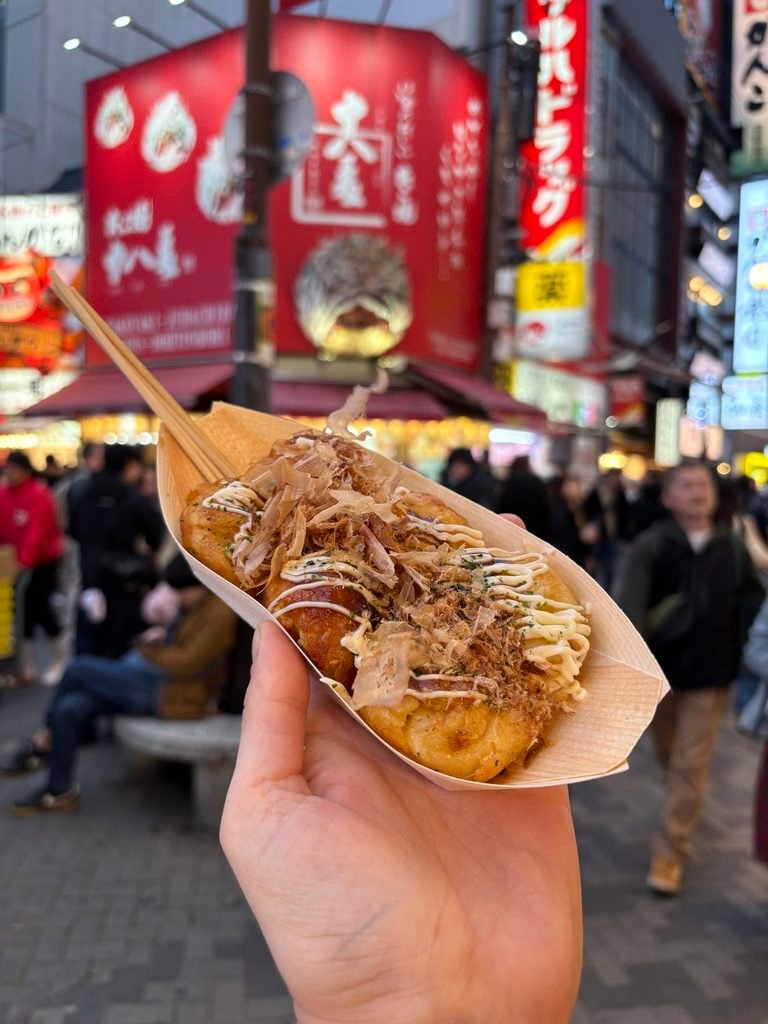
Another Osaka classic you absolutely shouldn’t miss is takoyaki.
These delicious little balls are made from batter filled with pieces of octopus and cooked in a special round griddle.
They’re usually served with takoyaki sauce, mayonnaise, and other toppings.
But here’s a little warning: They are incredibly hot on the inside.
Seriously, I don’t think I know anyone who has tried freshly made takoyaki without burning their tongue at least once.
So maybe give them a minute before taking that first bite.
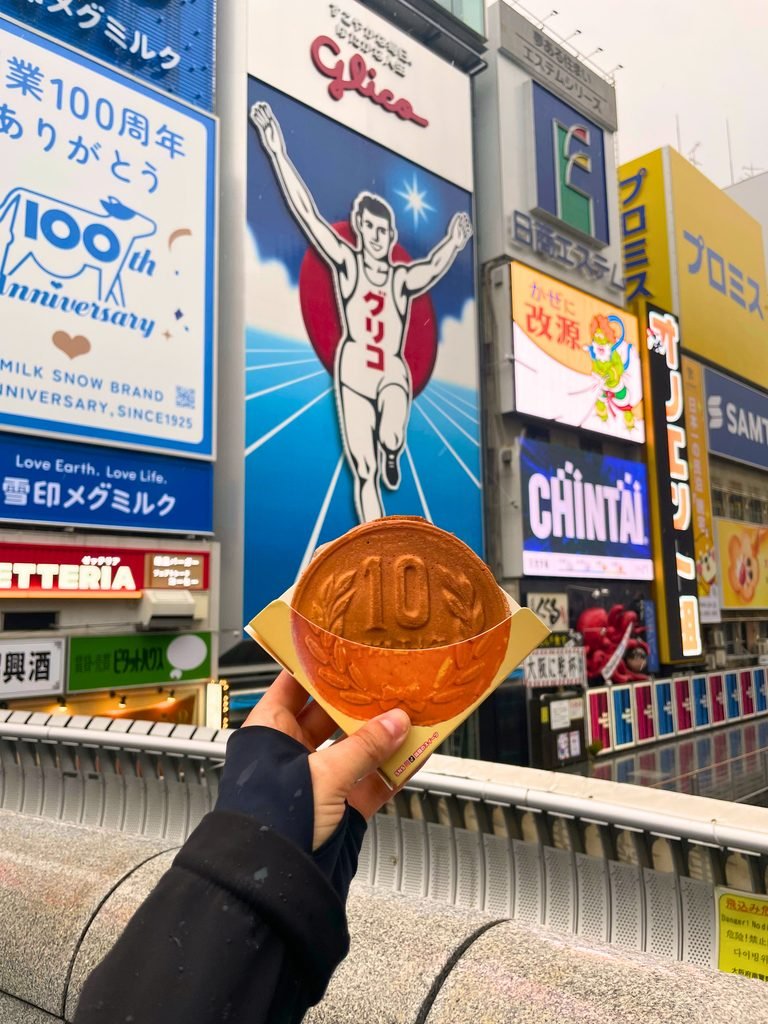
10-Yen Bread
Surprise! Despite its name, 10-yen bread actually costs quite a bit more than 10 yen.
Originally from South Korea, this popular street food made its way to Japan in 2022 and can now be found in places such as Dotonbori.
The bread is shaped like a giant 10-yen coin and has a soft, slightly sweet, pancake-like dough filled with lots of stretchy cheese.
It might not be a traditional Japanese snack, but it’s definitely delicious and worth trying.
Final Thoughts: Are 4 Days in Osaka Enough?
I think four days in Osaka is a great amount of time to explore the city’s main attractions without feeling too rushed.
With two days exploring central Osaka and two day trips to Katsuo-ji and Uji, you’ll experience much more than just the famous neon signs and busy streets.
And that’s exactly what I love about exploring Japan: sometimes the most memorable places are just a little outside the usual tourist hotspots.
So make sure to leave some room in your Osaka itinerary for spontaneous discoveries, delicious food, and a few unexpected stops along the way.
Affiliate widget: If you book through this widget, I may earn a small commission at no extra cost to you.
More Travel Stories You Might Enjoy….

A Daytrip To: Uji
Discover the best things to do in Uji, from matcha workshops and matcha soba to Byōdō-in Temple and peaceful riverside walks.
How to plan your trip stress-free
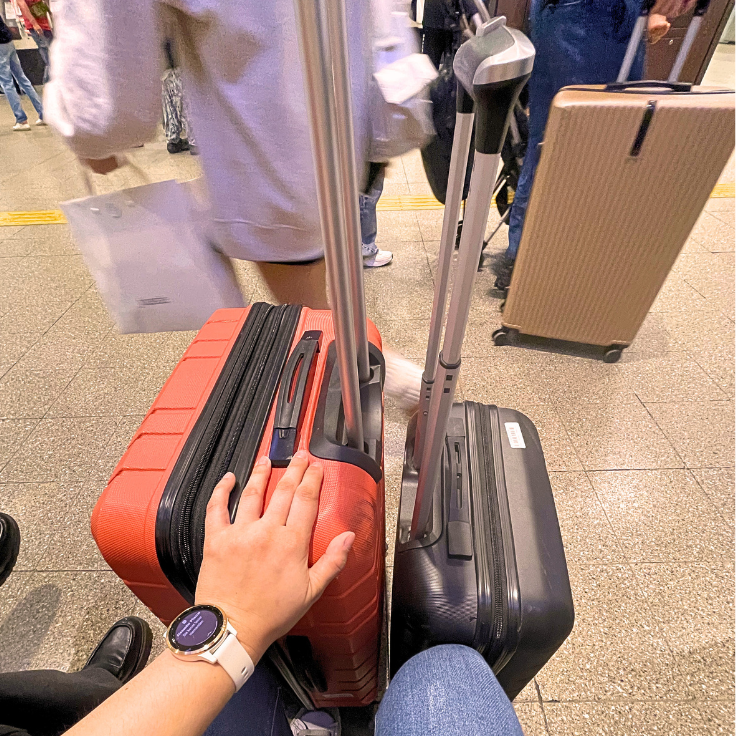
These are my practical tips to help you plan a more relaxed and stress-free Japan trip.

Must-See Places for Your First Trip to Japan
Planning your first trip to Japan can feel overwhelming, but a few iconic places are truly worth adding to your itinerary.